
1. What Is a Floor Saw
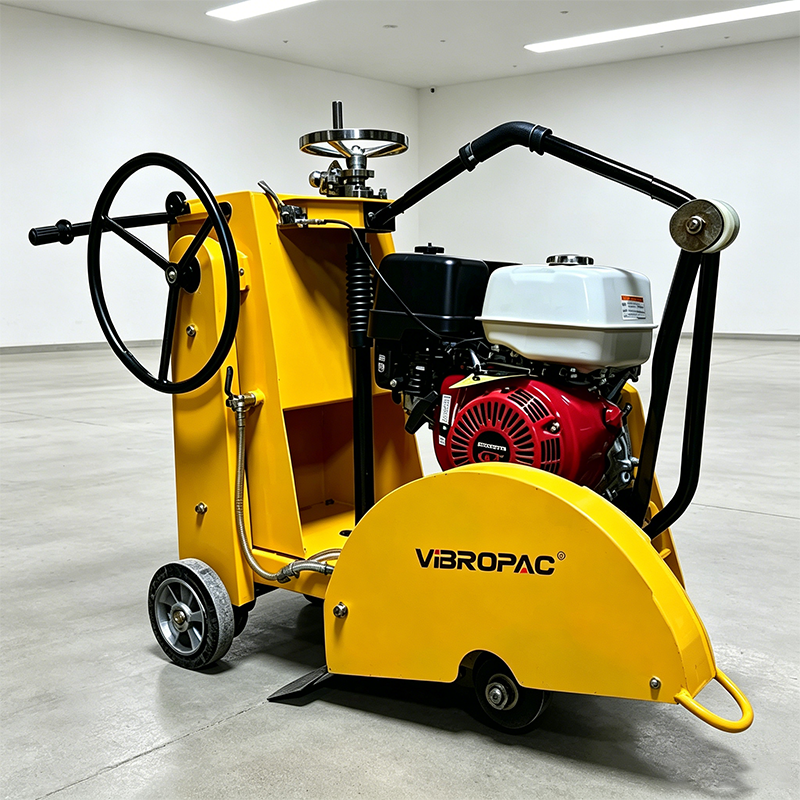
Unlike small‑size handheld cutters, our heavy‑duty floor saw is engineered for long‑time continuous roadwork. Operators can control cutting depth and travelling speed conveniently to acquire neat, tidy cutting slots and prevent rough cracks on pavement.
2. Main Classifications of Floor Saw
2.1 Gasoline‑Powered Floor Saw
2.2 Diesel‑Powered Floor Saw
3. Common Working Scenarios
- Municipal street road maintenance, expansion joint cutting for newly‑laid concrete road
- Asphalt road slotting before road repairing and crack treatment
- Driveway, sidewalk, courtyard and warehouse concrete ground processing
- Trench opening for water pipe, cable and drainage pipeline laying
- Airport apron, parking lot and hard‑standing ground renovation
4. Key Advantages Of Our Commercial‑Grade Floor Saw
Secondly, high‑strength metal frame and shock‑absorbing handrail. The whole machine stays steady during high‑speed blade rotation and reduces operating vibration.
Thirdly, efficient water‑cooling system. The water supply device cools down the diamond saw‑blade, lowers blade abrasion and suppresses construction dust.
Fourthly, flexible movement design with durable walking wheels. Workers are capable of moving the floor saw between different working zones effortlessly.
Fifthly, diversified specifications and customized service. We supply multiple‑size saw‑blade configurations and accept OEM service for global construction‑machinery dealers.
5. Practical Guidance When Selecting a Suitable Floor Saw
- Confirm your cutting‑depth requirement. Thick pavement needs machines matched with large‑diameter saw blades.
- Choose gasoline type for flexible short‑term jobs, diesel model for all‑day outdoor heavy‑duty construction.
- Inspect the quality of saw‑blade spindle, water‑cooling assembly and shock‑absorbing handles before purchase.
- Pick dust‑reduced equipment if your construction area has strict environmental‑protection rules.